Mental & Behavioral Health
Improve the mental health and wellbeing of St. Lucie County residents.
What is Mental & Behavioral Health?
Mental and behavioral health is a priority focus area for Healthy St. Lucie. Community partners are working together to improve mental wellness, reduce substance use, and expand access to care.Why It Matters in St. Lucie County
Mental and behavioral health are essential components of overall wellness, shaping how individuals think, feel, and act in daily life. Mental health refers to emotional, psychological, and social well-being, influencing how people handle stress, relate to others, and make decisions. Behavioral health is a broader term that includes mental health, substance use, and the everyday actions that affect physical and emotional wellness. Together, these health topics form a foundation for healthy growth, positive relationships, and productive participation in school, work, and community life.
Mental and behavioral health concerns are widespread and have a profound impact on individuals and society. According to 2022 data from the Centers for Disease Control and Prevention (CDC), more than 1 in 5 adults in the United States live with a mental illness, and nearly 1 in 25 live with a serious mental illness. Depression and anxiety remain leading causes of disability worldwide and are associated with increased risk of chronic diseases such as heart disease and diabetes. In addition, many individuals experience both mental illness and substance use disorders at the same time, a combination known as co-occurring disorders, which can complicate care and recovery.
Multiple factors influence mental and behavioral health. Adverse childhood experiences, trauma, and chronic stress can disrupt healthy brain development and increase vulnerability to mental illness later in life. Barriers such as stigma, limited health literacy, lack of access to services, workforce shortages, and cost can prevent individuals from receiving appropriate treatment. Notably, limited health literacy can increase stigma and reduce help-seeking, creating another barrier to receiving timely mental and behavioral health care. When mental health challenges are untreated, they can worsen physical health outcomes, increase healthcare costs, and place a burden on families and communities. Left unaddressed, these conditions can lead to lower educational attainment, reduced workforce participation, family stress, and increased use of emergency and inpatient services, all of which raise community health care costs.
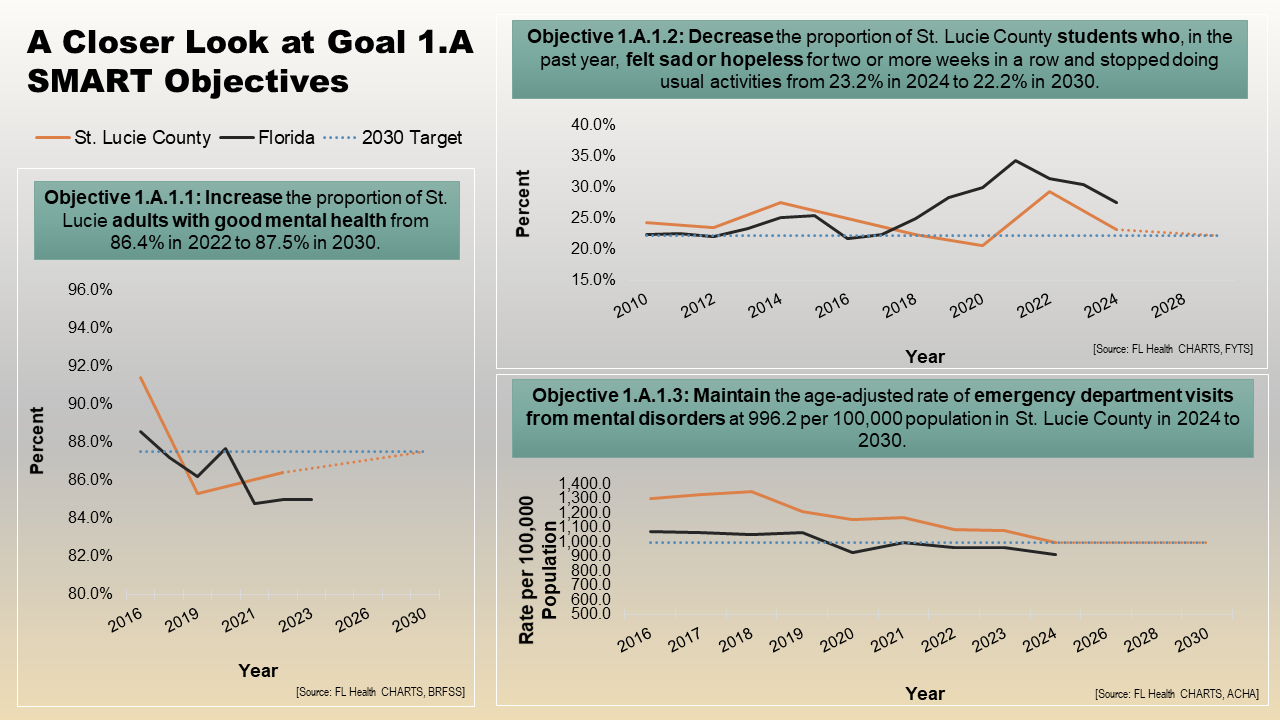
Mental Health in St. Lucie County
What We’re Doing
- Increase the proportion of adults with good mental health
- Reduce feelings of sadness or hopelessness among youth
- Maintain access to emergency and crisis services